Move through comfortable ranges
Reach, turn and bend at a pace you control. Mobility is the ability to use a range of movement; it involves joints, muscles, connective tissue and your nervous system working together.
 SriPhysiotherapy ClinicCall for appointment ↗
Movement education · Sri Physio
Understand the tissue.
Build movement you can use.
Fascia supports and connects structures throughout your body. Caring for movement means more than stretching: comfortable mobility, strength and regular activity all have a place.
Explore simple movement ideasA connected system
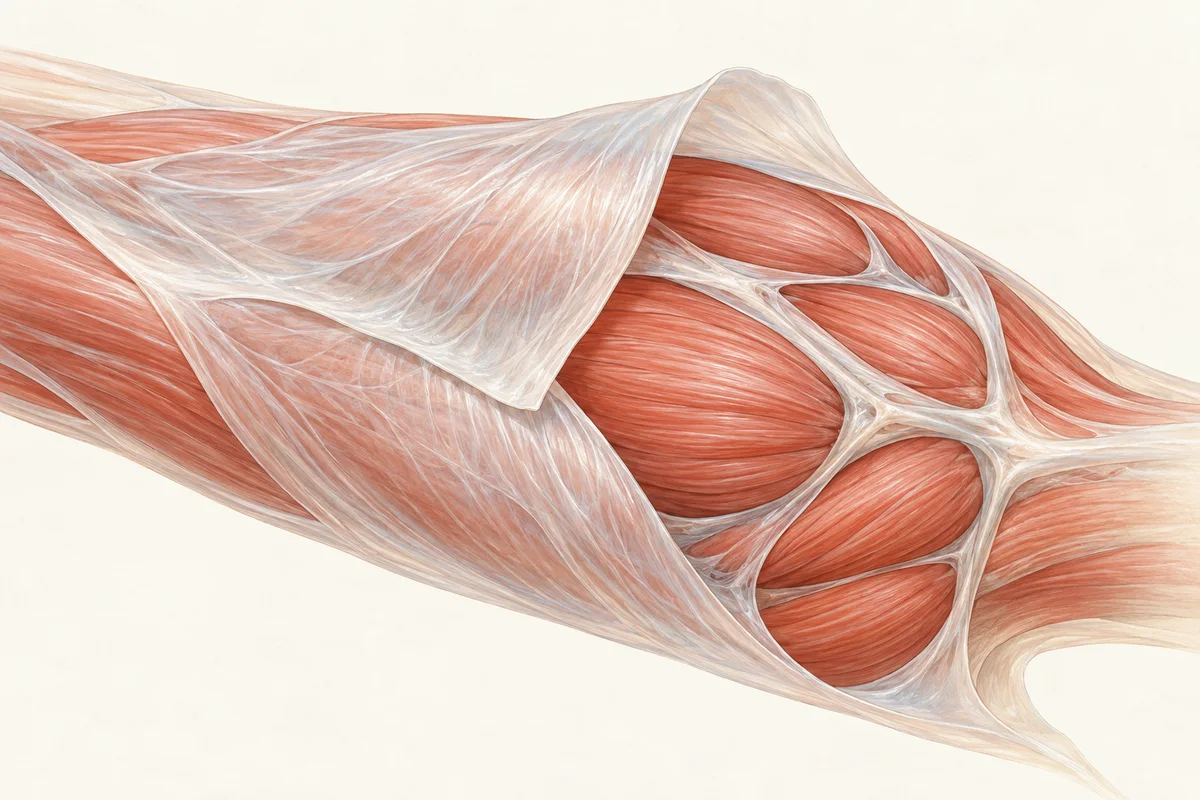
Fascia is collagen-rich connective tissue that surrounds and supports muscles and other structures. Its layers help neighbouring tissues move relative to one another. It is part of the system that supports and transmits forces during movement. [1]
Turning to look behind you, reaching a shelf and bending to put on shoes require usable movement. The goal is enough comfortable range and control for your daily life—not maximum flexibility or making every tissue as loose as possible.
Limited movement or pain cannot be blamed on fascia alone. A change in flexibility after exercise does not tell us which tissue changed. Assessment is more useful than assuming you need a “release”.
The foundations
Train the whole movement system. There is no need for a special fascia-only workout.
Reach, turn and bend at a pace you control. Mobility is the ability to use a range of movement; it involves joints, muscles, connective tissue and your nervous system working together.
Strength helps you use movement for real tasks, such as getting up from a chair or carrying shopping. Resistance training can also improve range of motion; stretching is not the only route to greater flexibility. [2]
Break up long periods in one position. Build walking, lifting or other familiar activities gradually. Increase one challenge at a time and allow recovery. Faster or springing movements are later options for suitable goals, not a starting requirement.
A gentle starting point
These are general examples for adults who can move comfortably, not a treatment plan. Choose a few easy repetitions to begin; skip anything unsuitable for you.
Begin at an easy pace for a minute or two. Use support if needed and let your breathing stay comfortable. This is a simple way to ease into activity.
Sit or stand securely. Reach one arm forwards, then gently turn your upper body within an easy range. Return slowly and try the other side. Avoid forcing an end position.
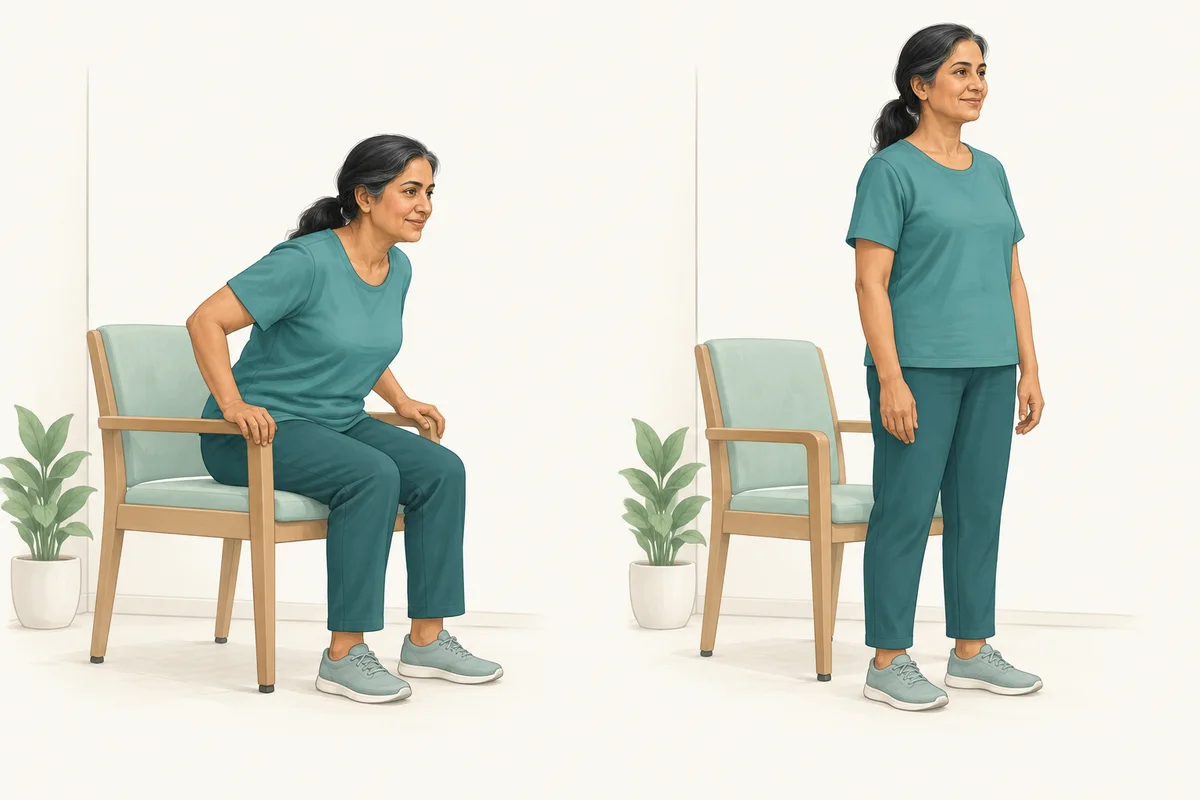
Use a stable chair against a wall. With feet supported, lean forwards slightly, stand up and sit back down slowly. Use the armrests if needed. [3]
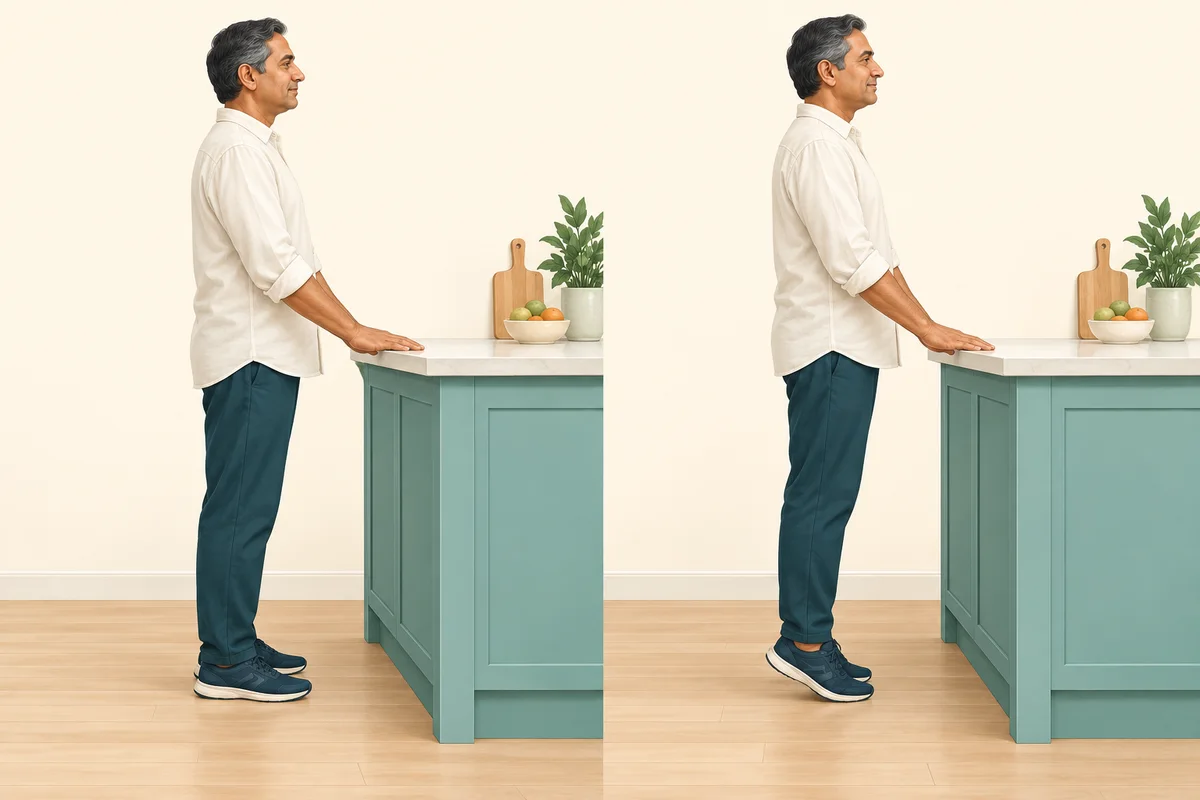
Hold a stable counter. Lift both heels gently, then lower with control. Keep the range small at first and stop if balance or pain makes it difficult. [3]
Start below your limit. Progress gradually only when the current amount feels manageable. If symptoms remain worse later that day or the next morning, reduce the amount and seek guidance if this keeps happening. After surgery, a recent injury, or with significant balance problems, ask for an individual plan first.
Optional, not essential
Foam rolling can temporarily improve range of motion in some people. Research does not show it is consistently better than other warm-ups for short-term flexibility. Most studies examine healthy participants, so findings do not establish treatment for a particular pain condition. [4]
Use it as an optional comfort or warm-up tool if it suits you. A “looser” feeling is not evidence that you broke adhesions, removed toxins or permanently remodelled fascia.
Keep pressure light and comfortable over muscle. Avoid bruised or injured areas, open wounds and direct pressure on joints or the neck. Ask a clinician first if you take blood thinners, have fragile bones, reduced sensation or circulation problems. Do not roll a newly swollen, painful calf.
Common questions
No. A feeling of tightness does not identify one tissue or a specific diagnosis. Muscles, joints, nerves, recent activity and sensitivity can all influence how movement feels. Persistent or worsening symptoms deserve an assessment.
Movement loads several tissues together. Fascia training is a broad term, not a way to isolate fascia. A useful plan combines movement practice, strength and gradual exposure to the activities you want to do.
No. Foam rolling is optional. It may temporarily improve range of motion, but a comfortable active warm-up is also useful. Feeling looser after rolling does not prove that adhesions were broken up or fascia was permanently changed.
Do not aim for pain, bruising or a forceful release. Use a comfortable range and light pressure. Stop if you develop sharp pain, tingling, numbness or worsening symptoms, and seek advice if these do not settle.
Start with short, manageable movement breaks and build a routine you can repeat. Strength work also needs recovery between sessions. There is no established universal fascia-specific dose; the right amount depends on your health, starting ability and response.
Sri Physiotherapy Clinic · Kumbakonam
If stiffness or pain limits your daily life, we can assess your movement, strength and goals, then help you choose an appropriate plan.
Calls are for appointments and directions. Assessment takes place in person.
Clinic locations & opening hours ↗General education, not a diagnosis or personalised exercise prescription. Research on mobility does not by itself prove a fascia-specific effect.